Secrets Manager
Published April 2026
Secrets Manager is the smallest example of agent-managed software in the shipped library. OpenRig boots HashiCorp Vault alongside a specialist agent that knows how to inspect and operate it.
The operator flow is direct: confirm the service is healthy, send a task to the specialist, then verify the result in Vault itself.
# Boot the rig
rig up secrets-manager

# Confirm the managed service is healthy
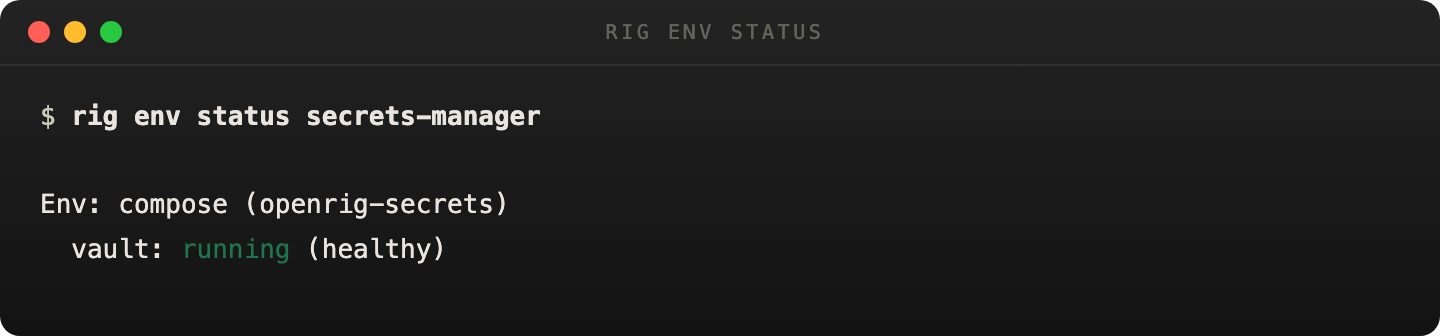
rig env status secrets-manager

# Dispatch work to the specialist
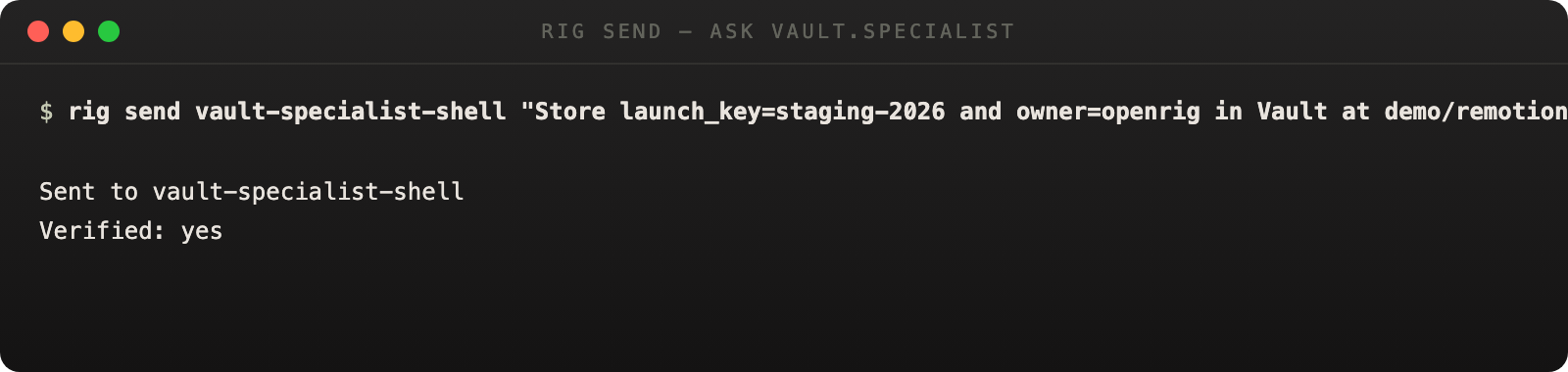
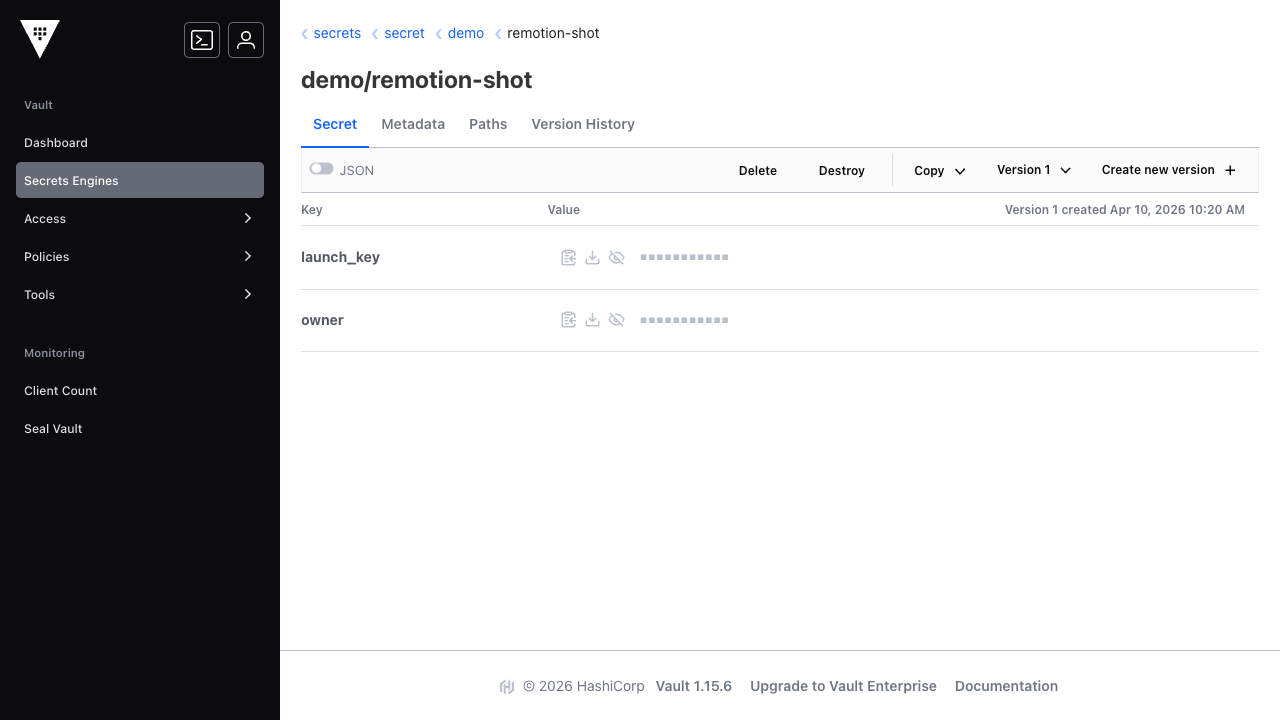
rig send vault-specialist@secrets-manager "show me the demo/remotion-shot secret" --verify
The rig exposes both the service-health surface and the specialist-agent surface from the same CLI.
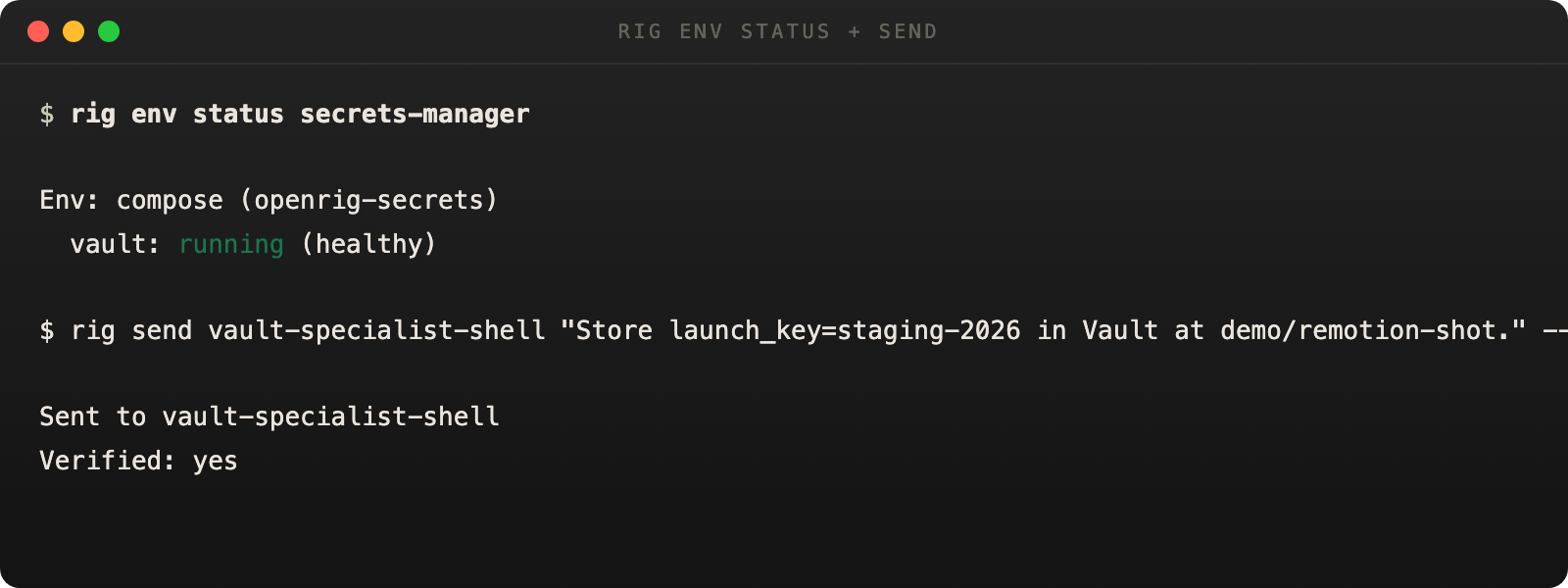
For service-backed rigs, `rig env status` is the honest health surface.
Dispatch work to the specialist and confirm that the message reached the agent.
The agent interacts with Vault in a normal terminal session and reports the result directly.
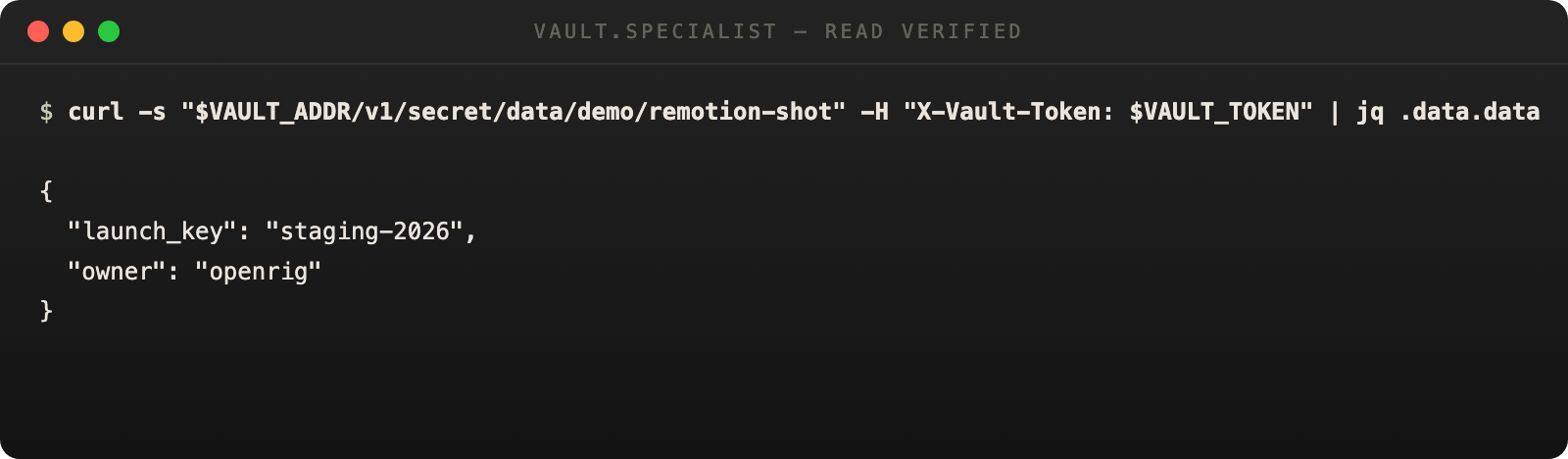
The final proof is the managed application's own interface, not a claim in marketing copy.
Why This Example Matters
Service-backed
This is not just a fleet of coding sessions. The rig also manages a real application environment.
Operator-visible
Environment health, task dispatch, and the resulting app state are all inspectable surfaces.
Small but real
One node and one service is enough to show the agent-managed software pattern without hiding behind abstraction.